2025: Coupling Critical Flow Physics to Biogeochemistry, Policy, and Local Communities for the Resiliency and Restoration of Mangroves and Their Blue Carbon (EDF)
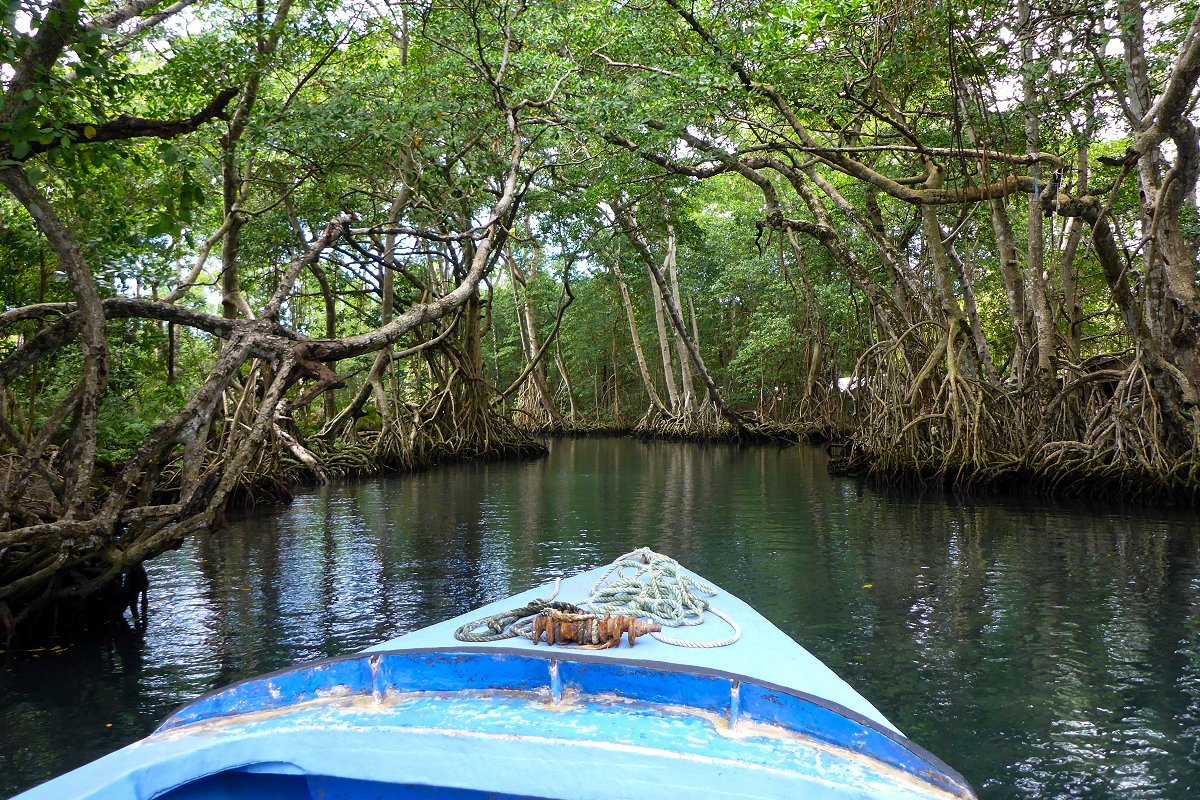
Mangroves provide a host of climate and ecosystem services to coastal communities, including biodiversity, fish nursery habitat, protection from flooding and storm surge, and carbon capture and storage. More than half of the world’s mangrove ecosystems are at risk of collapse by 2050, under the pressures of unsustainable development and climate change. Meanwhile, government investments and corporate purchases on the voluntary carbon market have created increasing demand for offset projects based on mangrove ecosystem restoration. Most of these restoration projects depend on planting mangrove propagules for reforestation — a single-pronged approach that has led to high failure rates. New evidence suggests planting efforts may be more successful when coupled or even replaced with ecological engineering that aims to restore natural tidal hydrology that has been disrupted by blockages or channel cuts. Cornell and Environmental Defense Fund researchers will leverage environmental fluid mechanics, biogeochemistry, hydrodynamics, climate change-induced sea level rise, and community stewardship of mangrove forests to guide effective and lasting mangrove restoration.
Cornell: Todd Cowen, Seth Schweitzer, and Johann Delgado (all Cornell Engineering, Civil & Environmental Engineering)
EDF: Gemma Carroll, Kristin Kleisner
Collaborator: Alejandro Orfila (Director of the Mediterranean Institute for Advanced Studies, IMEDEA)