2025: Interventions in Early Life of Dairy Calves to Reduce Methane Emissions in Adulthood (Multi-NGO)
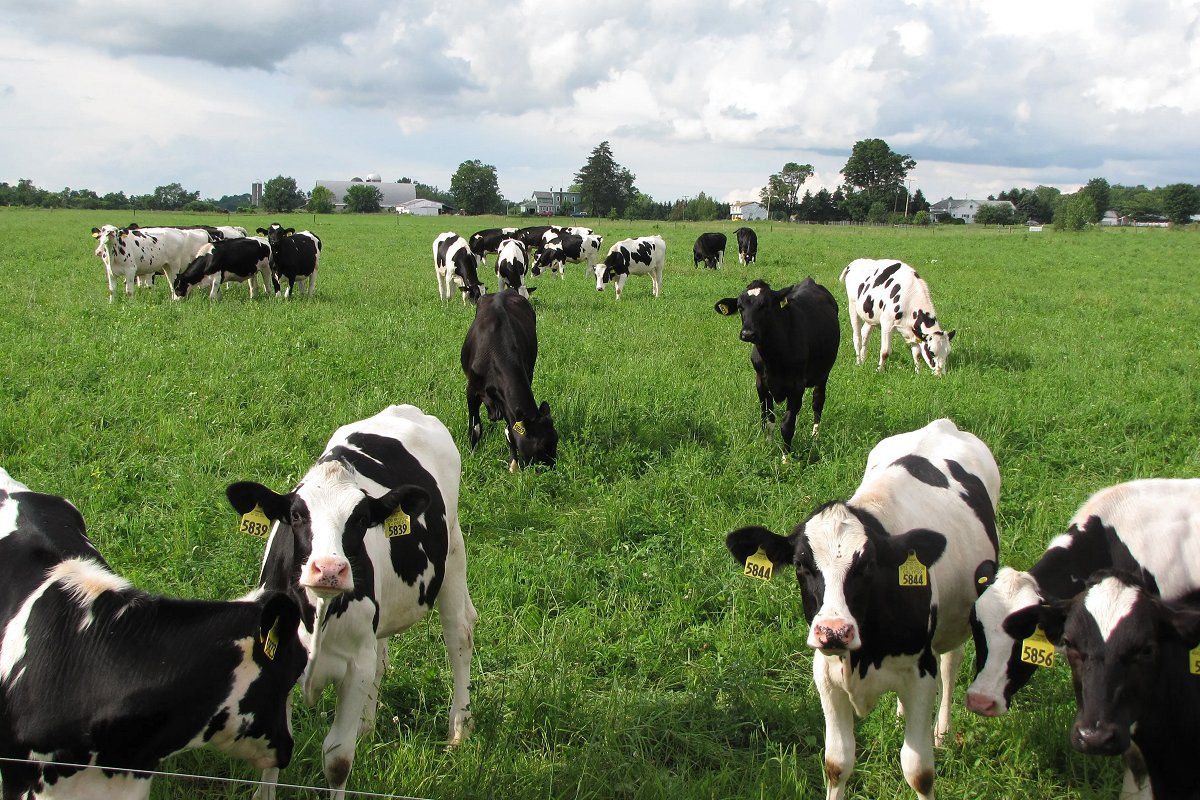
Around 40% of dairy operations in the US get their heifer cow replacements from large calf-raising facilities, many of which limit their feedings to one gallon of milk or milk replacer twice daily. Previous studies have shown that calves fed additional milk or milk replacer produced more milk during their first lactation, experienced less disease, gained more weight, and emitted less methane than calves fed lower nutritional plans. This project will study 122 dairy calves, half fed a diet similar to that fed in large calf ranches and half fed a higher-energy diet. Researchers will test the effects of improved feeding plans for dairy calves and measure their methane intensity at different time points post-weaning with a greenhouse gas sensor.
This project is part of a dairy sustainability research program jointly managed by Cornell Atkinson Center for Sustainability, The Nature Conservancy, Clean Air Task Force, and Environmental Defense Fund.
Cornell: Francisco Leal Yepes (Vet School, Population Medicine and Diagnostic Sciences)
NGO Partners: Fernanda Ferreira (CATF); Peri Rosenstein (EDF)