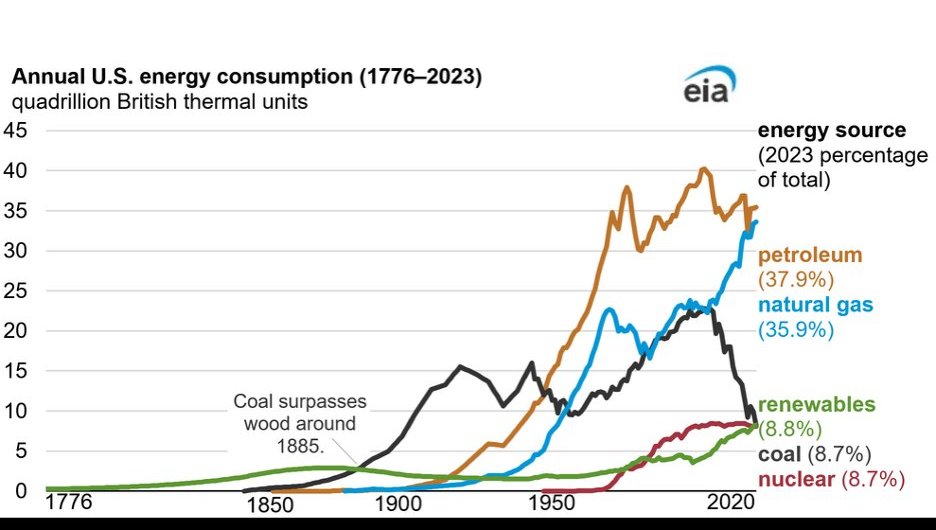
When I’m asked whether Cornell Atkinson will continue to prioritize the energy transition despite recent changes to U.S. federal energy policy, my answer is a resounding yes. The future of non-carbon-based energy is not as bleak as some climate advocacy groups assert. Here are three reasons for optimism.
First, the Trump administration is trying to kill only some non-carbon-based energy sources. It has halted development of new offshore wind farms, and the One Big Beautiful Bill Act of 2025 hastens the demise of tax breaks and other incentives for solar and wind production and electric vehicle purchases. These steps and the administration’s deemphasis of the costs and emphasis on the benefits of climate change, e.g., in the recent “Critical Review” report from the Department of Energy, might suggest that the energy transition will come to an end. However, OBBBA also incentivizes other non-carbon energy sources, including green hydrogen and next-generation geothermal, hydropower, and nuclear – as well as energy storage – well into the 2030s.
Second, the biggest potential gains in climate mitigation and adaptation are now in the Global South—not in the U.S. Given current trajectories of population growth and energy demand, the U.S. will be responsible for only 10% of global emissions in the 21st century. In contrast, the share of global human population that is African will rise from about 18% today to about 40% by 2100, and energy use per capita in Africa will skyrocket. The most efficient path to global decarbonization is to export to the Global South the innovations, technologies, and products (in addition to natural gas) that reduce greenhouse gas emissions. Replacing a coal burning plant in South Africa, where coal currently provides 70% of electricity, with solar farms, wind farms, or nuclear plants would produce a much bigger global bang for the buck than investing in a further incremental reduction in U.S. emissions.
Finally, affordably satisfying the dramatic increase in U.S. electricity demand – turbocharged by data center construction to support the booming AI industry – will require an all-of-the-above strategy of energy production. Since utility-scale solar and onshore wind are the most quickly deployable energy generation sources, as well as the cheapest even without subsidies, new installations will continue. U.S. demand for electricity is forecast to grow about 2% annually. This makes even the current Department of Energy enthusiastic about many components of the energy transition, including non-carbon energy sources, as reflected in last week’s DOE announcement of investments in small modular nuclear reactors.