2025: AI-Powered Confidence in Additive Construction
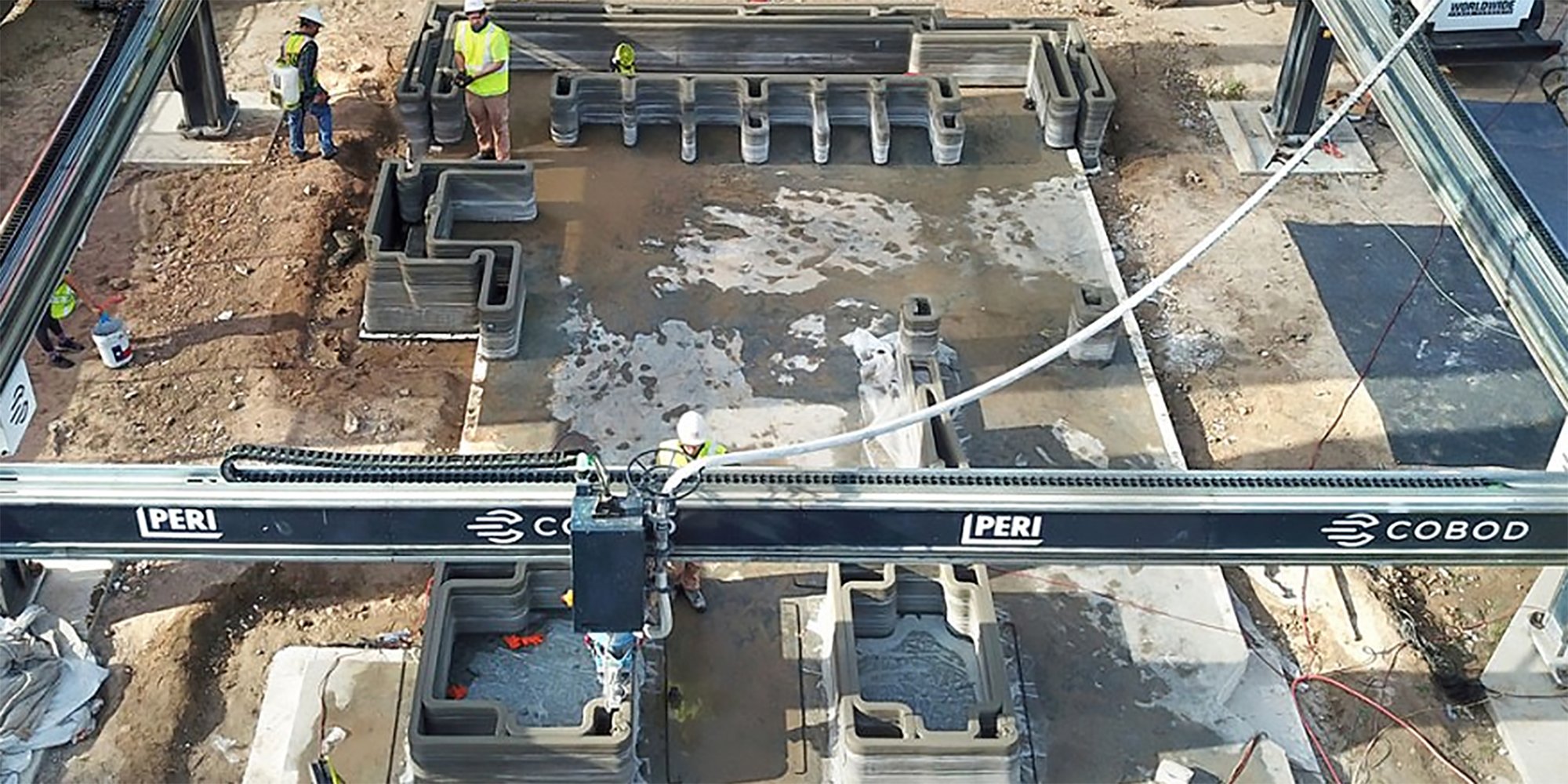
Additive construction, especially 3D concrete printing, is poised to positively impact the construction industry by reducing carbon in building and other construction, protecting people and infrastructure with building materials resistant to extreme events, and providing an avenue for rapid, automated, dignified housing for climate-displaced communities in transition. However, this relatively new construction technique faces key challenges: construction with extruded, layered cementitious materials introduces structural uncertainties at each layer interface, where the fabrication environment and layer-to-layer print times introduce variables in the way the layers bond. Researchers seek to collect camera and laser-line data that is synchronized with the relevant print processes and component geometry, and to employ machine learning to correlate print data to performance of the 3D printed elements. The key goal is to improve engineering confidence in the structural components fabricated using 3D concrete printing.
Investigators: Sriramya Nair and Nils Napp, both Cornell Engineering