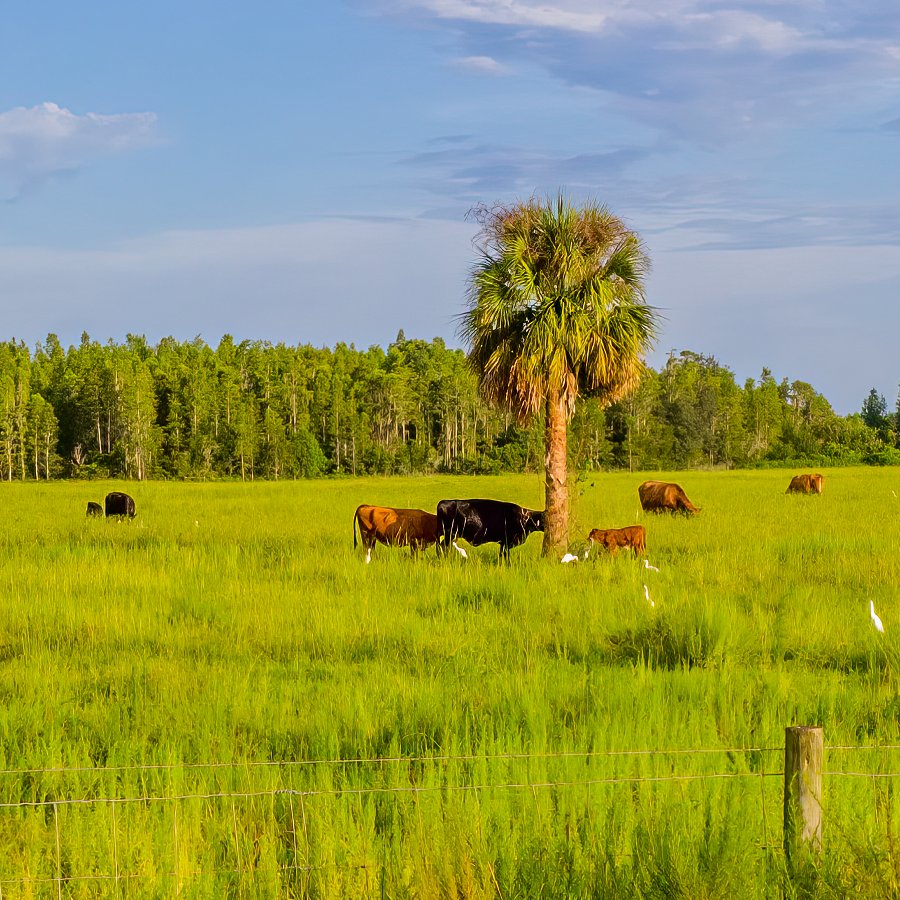
2025: Investigating Methane Management Levers in Subtropical Pasturelands
Reducing methane emissions through rangeland management practices offers potential rapid climate mitigation due to methane’s short atmospheric lifespan and high warming potential. Approximately 50% of all methane emissions come from human activities, with livestock and agricultural practices being among the largest contributors. Therefore, providing methane reduction strategies to land managers in the agricultural sector is an opportunity to ameliorate climate change. Students will contribute to ongoing research by exploring two areas: (1) how plant structures influence methane transport, and (2) how deep soil layers affect methane production, using ground-penetrating radar. In collaboration with Archbold Biological Station Buck Island Ranch, one of the largest experimental cattle ranches in the United States, this work provides hands-on experience in sustainability science and helps identify practical ways to reduce greenhouse gas emissions from agriculture.
Faculty Lead: Jed P. Sparks, Ecology and Evolutionary Biology, Cornell CALS
Graduate Student Mentor: Allasandra Valdez, Ph.D. Student, Ecology and Evolutionary Biology