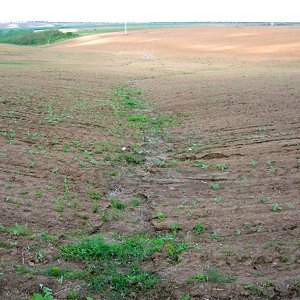
2020: Soil Health Assessment, Management, and Policy to Support Sustainable Land Management in China (The Nature Conservancy)
Compared to the United States, China has much less agricultural land, by area. China’s grand challenge is to sustainably feed more than 1/6th of the world’s population on less than 1/14th of the world’s arable land area, while resources diminish and the climate changes. In order to ensure future food, water, and energy security, the health of China’s soils must be improved. Soil assessment methods in China currently focus on production-oriented management, rather than sustainable ecosystem services. Cornell University is a pioneer in soil health education, research programs, and methodologies for soil health assessment. This team proposes to adapt the Cornell framework for Chinese production environments, which will be essential for the holistic assessment of soil functioning, identification of sustainable management solutions, prioritizing TNC program efforts, and informing policy for different stakeholders.
Cornell: Harold van Es (School of Integrative Plant Science), Rebecca Schneider (Cornell CALS/Natural Resources and the Environment), Joseph Amsili (Cornell Cooperative Extension)
TNC: Yi Ling, Nan Zang (both China Program)
China Agricultural University: Junling Zhang