
Cornell Climate Impact Speaker Series
The Cornell Climate Impact Speaker Series highlights the work of prominent leaders in climate change mitigation and adaptation. It is an opportunity for the Cornell community to hear from climate professionals in business, academia, philanthropy, and government and learn from their experiences and insights.
(A time for conversation and refreshments will follow each event.)
This series is organized and sponsored by The 2030 Project and Cornell Atkinson Center for Sustainability.
September 2: Iván Duque (Former President of Colombia)
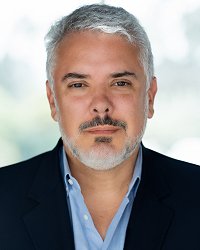
From Green Manifesto to Global Humanism: Evolving Climate Leadership in the 21st Century, a Fireside Chat with Iván Duque
(September 3: eCornell Keynote video)
Co-host: Emerging Markets Institute
Iván Duque is a visionary leader and global voice on sustainability, innovation, and democratic values. Elected at the age of 41, he became the youngest elected President in Colombia’s modern history, serving from 2018 to 2022. A devoted husband to María Juliana and father of three, Duque combines a deep commitment to family with a lifelong dedication to public service and global collaboration.
He currently serves on the Leadership Council of Concordia and is a member of the World Leaders Circle (WLC) at the Blavatnik School of Government, University of Oxford. He is also a Distinguished Fellow at the World Resources Institute, the Bezos Earth Fund, Cornell’s Emerging Markets Institute (EMI), the Cornell Atkinson Center for Sustainability, Yale’s Jackson School of Global Affairs, and Barna Management School. In addition, he is a Professor of Practice at the Adam Smith Center for Economic Freedom at Florida International University. He serves on the Council for Hope of the Jane Goodall Foundation and acts as an Ambassador for the World Coalition for Nature.
Duque is an active board member of Conservation International, the Science Based Targets initiative (SBTi) and serves on the advisory boards of the McKinsey Sustainability Council, the Geopolitical Advisory Council, and the FIFA Foundation.
In 2024, Duque furthered his legacy by launching the Iván Duque Center for Prosperity and Freedom. This initiative advanced dialogues and policies promoting prosperity, freedom, and sustainable development on a hemispheric scale.
Recognized as a global expert in security, migration, green finance, energy transition, and conservation, Duque has led ambitious and impactful initiatives. In 2022, he launched the Concordia Amazon Initiative, convening global leaders to protect the Amazon rainforest. That same year, he founded the I+D Foundation to empower young innovators from Colombia’s most remote regions — a project poised to become one of Latin America’s most influential think-and-do tanks.
Iván Duque’s unwavering dedication to sustainability, democratic leadership, and social inclusion continues to shape critical conversations on the global stage
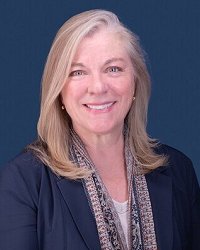
September 11: Katherine Hamilton (38 North)
(video)
Transitions in a Time of Chaos
Co-host: Smith School of Chemical and Biomolecular Engineering
Abstract: Katherine Hamilton (’83) will speak about transitions, highlighting where progress has been made in clean energy and where it now has the most promise. Her talk will touch on her southern background, her experience at Cornell, her move into energy technology, then shift into policy. Katherine will discuss what she has seen over time as the throughlines in the energy transition and the most salient policy issues (and the importance of policy itself). Her talk aims to be relevant and informative, no matter the student’s field of study or career path.
Bio: Katherine Hamilton ’83 is Chair of 38 North and has for the third time been named one of the 500 most influential people in Washington, DC, by Washingtonian magazine. As an international policy expert, Katherine was an original and longtime host of The Energy Gang podcast, was a regular contributor to The Carbon Copy podcast, and has now joined the original Gang to launch Open Circuit. Katherine has led several councils of the World Economic Forum as a global policy and technology thought leader and is currently a Senior Executive in Clean Power and Electrification. She served as Vice Chair of the board of Greentown Labs, with start-up hubs in Somerville, MA and Houston, TX and currently serves as a Non-Executive Director at Smarter Grid Solutions, as an Independent Director at Peak Power, and as an Advisor to MKB, a growth equity fund. Katherine served as President of the GridWise Alliance, advocating for smart grid funding in the Obama Administration’s Recovery Act. Prior to that role, Katherine was a policy advisor for Good Energies, Inc., a private investment company with a portfolio in clean energy technologies of nearly $6 billion. She co-directed the American Bioenergy Association, working with the states of Maryland and New Jersey to develop renewable portfolio standards. At the National Renewable Energy Laboratory (NREL), Katherine led buildings research and then managed government relations in Washington, DC. Katherine spent a decade at Virginia Power, designing grids and managing commercial customer projects. Katherine studied electrical engineering at Northern Virginia Community College and holds degrees from Cornell University and the Sorbonne. Katherine was previously profiled and listed on the #Solar100 board by kWh Analytics and received a Cleanie Award as Entrepreneur of the Year.
October 16: Doreen Harris (NYSERDA)
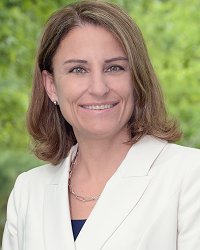
NYSERDA’s 50 Years of Energy Innovation & Leadership
4 p.m., 121 Atkinson Hall
Co-host: Cornell Engineering
Abstract: New York State Energy Research and Development Authority President & CEO and chair of the State Energy Planning Board, Doreen Harris will reflect on NYSERDA’s 50 years of leading New York State energy planning, and the development of this year’s State Energy Plan, which provides broad policy direction guiding energy-related decision making within New York State.
Bio: Doreen M. Harris was appointed President and CEO of the New York State Energy Research and Development Authority (NYSERDA) on April 7, 2021, after serving as Acting President and CEO since June 2020.
President Harris is leading NYSERDA’s role to advance the policy frameworks, clean energy technologies, and solutions to help further New York’s clean energy transition while creating hundreds of thousands of good-paying clean-energy jobs and building an equitable economy.
Under President Harris’s direction, NYSERDA is supporting New York’s clean energy initiatives through advancing infrastructure and innovation, large-scale and distributed renewables, building decarbonization, advanced nuclear, energy storage, transportation electrification, clean fuels, transmission and resiliency.
President Harris joined NYSERDA in 2010 and served as Vice President of Large-Scale Renewables, where she spearheaded the strategic development of New York’s land based renewable and offshore wind resource, including the execution of the State’s offshore wind master plan. Prior to her career in public service, President Harris spent more than a decade in the private sector, serving in management and engineering roles.
President Harris serves as chair of the State Energy Planning Board, and on the boards of the Advanced Energy Research and Technology Center (AERTC), Alliance to Save Energy, National Offshore Wind Research and Development Consortium, and NY BEST; and is a member of the Sustainable Development Solutions Network Leadership Council and an ambassador for the Clean Energy Education and Empowerment (C3E) Initiative.
President Harris holds a Bachelor of Science in Chemical Engineering from the University of Rochester and a Master of Business Administration from the University at Albany, State University of New York.
October 30: James Balog (Visionary Environmental Photographer)
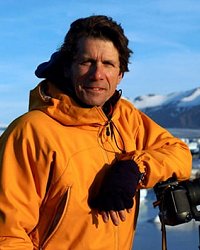
Finding Earth: A Quest for What Makes Nature Natural in a Changing World
(video)
Abstract: For more than four decades, environmental photographer and filmmaker James Balog has documented the profound ways human activity is reshaping Earth’s landscapes and climate. In this talk, Balog will share striking images and film clips from his global expeditions, revealing the visible signs of climate change — from receding glaciers and rising seas to floods and raging wildfires. Drawing on his experience at the intersection of art and science, Balog invites us to confront the human story within the Anthropocene and consider how creativity can illuminate paths toward environmental sustainability.
Bio: For 40 years, as a photographer, James Balog has broken new conceptual and artistic ground on one of the most important issues of our era: human modification of nature. An avid mountaineer with a graduate degree in geography and geomorphology, Balog is equally at home on a Himalayan peak or a whitewater river, the African savannah, or polar icecaps. His 2018 film The Human Element is an innovative look at the intersection of humanity and the rest of nature. It has received numerous awards and been screened worldwide.
To reveal the impact of climate change, Balog founded the Extreme Ice Survey (EIS) in 2007. It is the most wide-ranging, ground-based, photographic study of glaciers ever conducted. The project was featured in the internationally acclaimed documentary Chasing Ice and in the 2009 PBS/NOVA special Extreme Ice. One YouTube video clip from Chasing Ice has received more than 58 million views. Chasing Ice won an Emmy in 2014 and was shortlisted for the Academy Awards. It has been screened at the White House, U.S. Congress, Great Britain’s House of Commons, the United Nations, and major international science and policy conferences, including COP-15 in Copenhagen and COP-21 in Paris.
Balog is the author of eight books. His images have been collected in dozens of public and private art collections—and extensively published in the world’s magazines, particularly National Geographic.
Many organizations have given Balog their highest accolades, including The Heinz Foundation, American Geophysical Union, Royal Photographic Society of Great Britain, the Crown Prince of Dubai, Duke University, and the universities of Alberta, Missouri, and Colorado.
Balog is currently a Cornell University A.D. White Professor-at-Large.
November 12: Roger Pielke, Jr. (The Honest Broker)
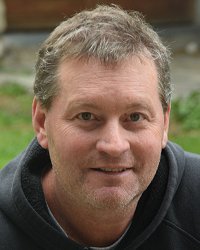
What Climate Science Actually Says About Extreme Weather
(video)
Abstract: For the past 3 decades Roger Pielke Jr. has published widely in the scientific literature on extreme weather and its impacts on society, along with many other topics related to climate science, policy, and politics. In this talk, Pielke will discuss what data, research, and the Intergovernmental Panel on Climate Change say about how hurricanes, floods, drought, tornadoes, heat waves, and other extreme weather phenomena have—and have not—changed, and how they might change in the future. Pielke has long argued that the actual science of extreme weather falls far short of the hype and hyperbole found in media coverage and climate advocacy. For his efforts, the White House attacked Pielke, and Congress investigated him. In this lecture, Pielke will share the latest science on climate change and extreme events, along with his professional journey through the climate debate.
Bio: Roger A. Pielke, Jr. is concurrently a Senior Fellow at the American Enterprise Institute and a professor emeritus at the University of Colorado Boulder. Roger was on the faculty of the University of Colorado Boulder from 2001 to 2024. Roger teaches and writes on a diverse range of policy and governance issues related to science, technology, environment, energy, climate, innovation, and sports.
September 5: Aliya Haq ’03 (Breakthrough Energy)
(video)
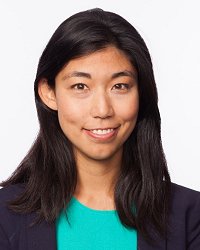
In the last three years, Congress passed the Inflation Reduction Act (IRA) and the Bipartisan Infrastructure Law (BIL), establishing approximately $500 billion in federal funding for clean energy projects. These laws together represent the most historic action any nation has ever taken to address climate change and ushered in a new era of optimism for a clean energy future. However, the success of these laws hangs in the balance, with political obstacles, regulatory hurdles, and infrastructure bottlenecks creating significant headwinds for clean energy projects to move forward. This conversation will include looking back at the work behind-the-scenes that led to the creation and passage of these laws, and looking ahead to what work is needed in coming months and years to ensure that the US is able to realize the full potential of the IRA/BIL, and achieve significant GHG reductions.
Aliya Haq ’03 leads the team at Breakthrough Energy that advocates for an ambitious climate policy agenda in the U.S. that will accelerate the transition to a global clean energy economy. She manages the development of policy ideas and frameworks to speed up clean technology innovation and deployment across multiple economic sectors, including power, industrial, buildings, transportation, and agriculture. She also oversees strategies around grantmaking, convening, policymaker education, and communications to advance clean energy and climate policy.
November 7: Constantine Samaras (Carnegie Mellon University)

(video)
Priorities for Climate Policy in the United States of America
In 2021, the United States submitted a 2030 Nationally Determined Contribution for emissions reductions under the Paris Climate Agreement, with a target of 50-52% below 2005 levels. In 2025, the U.S. will submit a new Nationally Determined Contribution for 2035, which will set the pace and scale of new emissions reductions activities, as well as the affect the likelihood of achieving the U.S. climate commitment of net-zero emissions by 2050. This presentation characterizes the major elements of a successful 2035 Nationally Determined Contribution, including projected changes in electricity demand from vehicles, homes, industry, and Artificial Intelligence. Then, the presentation outlines a robust decision-making framework for setting the 2035 target that maximizes the likelihood of reaching the U.S. commitment of net-zero emissions no later than 2050. The presentation discusses the policy process in the White House, Executive Agencies, and Congress, and concludes with policy recommendations for developing a robust 2035 U.S. Nationally Determined Contribution for emissions reductions.
Dr. Constantine (Costa) Samaras is the Director of Carnegie Mellon University’s Scott Institute for Energy Innovation, and the Trustees Professor of Civil and Environmental Engineering. From 2021-2024, he served in the White House Office of Science and Technology Policy (OSTP) as Principal Assistant Director for Energy, OSTP Chief Advisor for Energy Policy, and then OSTP Chief Advisor for the Clean Energy Transition. His research focuses on the pathways to clean, climate-safe, equitable, and secure energy and infrastructure systems. He is the Lead Author of the Mitigation Chapter of the 6th U.S. National Climate Assessment, and he is also a Founder and Director of both the Center for Engineering and Resilience for Climate Adaptation and the Power Sector Carbon Index.
December 5: Robinson Meyer (Heatmap)
(video)
Three Charts About Decarbonization
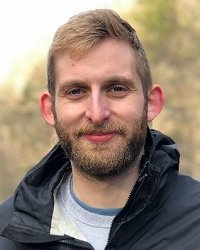
Ben Furnas, Executive Director of The 2030 Project, will host Robinson Meyer (Heatmap) for conversation and Q&A.
Robinson Meyer is the founding executive editor of Heatmap. He was previously a staff writer at The Atlantic, where he covered climate change, energy, and technology.