
Preparing Early-career Researchers and Business Students for Careers in Sustainability
As the scope, pace, and impact of environmental and social issues increase in scale and complexity, there is a growing need for professionals who can understand the underlying science of these issues and how best to factor them into innovation and investment decision-making processes that support communities and ecosystems.
The Semlitz Family Sustainability Fellows Program is designed to bring together early-career researchers and business students to prepare for careers in sustainability leadership. Through a combination of coursework, professional development, and experiential learning, Semlitz Fellows learn to make informed choices about where and how to apply sustainability-related decision-making to impact our most pressing challenges. They work across scientific and economic dimensions to achieve impact and prepare for careers which affect our economies, environment, and society.

2024-25 Semlitz Fellows and advisors (left to right: Jacob Hyppolite II, Lauren Swank, Shardul Prabhu II, Mark Milstein, Misaki Saito, David M. Lodge, Bayu Ahmad, Verne Thalheimer, and Christy Goodale)
How to Apply
Eligibility:
- Cornell MBA students in their second year
- Cornell Ph.D. students or postdoctoral scholars (within two years of Ph.D. completion) from a range of fields with work related to sustainability who have demonstrated interest in engaging with the business community
The 2026-27 Cycle Is Closed:
- Previous Call for Applications
Questions or More Info:
- Contact semlitz@cornell.edu
Recipients
Mahmoud Aboelkheir (Ph.D. ’26, Fiber Science)
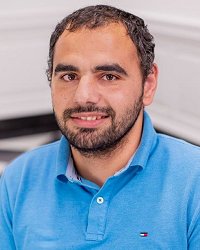
Mahmoud Aboelkheir is a Ph.D. candidate in Fiber Science at Cornell University, where his research focuses on developing bio-based adsorbent materials for water and air remediation. His work integrates principles of chemistry, materials science, and environmental sustainability to design advanced fibrous systems capable of capturing and removing pollutants from complex environments.
Originally from Egypt, Mahmoud earned his Bachelor’s degree in Chemistry from Menofia University. Supported by the prestigious Fulbright Scholarship, he pursued his M.S. in Fiber Science at Cornell, where he explored the intersection of bio-based polymers and functional materials for environmental applications. Outside of research, he enjoys watching soccer and basketball games and spending time playing with his lovely twins.
Bolanle Adeniran (MBA ’26, SC Johnson College of Business)

Bolanle Adeniran is an MBA candidate at Cornell University’s Johnson Graduate School of Management. She brings over four years of experience across investment management, fund strategy and mergers and acquisitions.
She began her career developing tailored investment solutions for private wealth clients before moving into M&A where she gained hands-on experience in valuation, deal structuring and corporate strategy.
This past summer, Bolanle interned in investment banking at Bank of America in New York where she worked on transactions supporting mid-market clients across multiple industries.
Passionate about the intersection of finance and sustainability, Bolanle is both a Semlitz Fellow and an Environmental Finance and Impact Investing (EFII) Fellow. She hopes to leverage her finance experience to explore how capital can drive long-term environmental and social resilience.
Behrooz Azimzadeh (Ph.D. ’24, Soil and Crop Sciences)

Behrooz Azimzadeh is a Postdoctoral Associate in the Soil and Crop Sciences Section of the School of Integrative Plant Science at Cornell University. He holds a PhD in Environmental Soil Chemistry from Cornell. His research spans soil and environmental (bio)geochemistry, with a focus on the fate and transport of emerging contaminants such as microplastics and per- and polyfluoroalkyl substances in soil and water systems. He bridges molecular-scale interfacial processes with field observations and modeling to better understand how human activities alter soil and water ecosystems. His current work investigates microplastics in soils, with emphasis on plastisphere formation and its impacts on biogeochemical cycles, microbial diversity, and contaminant dynamics. As a Semlitz Family Sustainability Fellow, he is assessing the market potential and environmental risks of applying biosolids to land, with emphasis on nutrient recovery and sustainable strategies for contaminant mitigation.
Sarah Callaghan (MBA ’26, SC Johnson College of Business)

Sarah Callaghan is a second-year MBA student from Scotland with background in policy. She is passionate about sustainability in food systems and the role of ESG in driving business impact. With her blend of policy and business expertise, Sarah is committed to helping companies balance financial success with environmental and social responsibility.
William Ezeani (MBA ’26, SC Johnson College of Business)

William is a 2nd year MBA student. Prior to the MBA, William worked for 7 years in the Power, Utilities and Renewables sector in Toronto Canada. Over the summer, William worked in an investment banking. William’s capstone focuses on the intersection of finance with climate science and how to get both fields better aligned.
Originally from Nigeria, William enjoys watching and playing soccer and chess in his spare time. William is a huge fan of Arsenal in the UK, whom he has been supporting for 20+ years. William also enjoys cooking Nigerian dishes.
William is the youngest of four siblings and just got married over the Fall break.
Mai Ichihara (Ph.D. ’28, Global Development)

Originally from Monument, Colorado, Mai is a Ph.D. student in Development Studies examining how place-based approaches can activate regional food networks and transform agricultural sustainability governance. Her research investigates the incentives, accountability mechanisms, and coordination strategies needed to scale regenerative agriculture—with particular focus on MRV (measurement, reporting, and verification) frameworks, behavioral change, and territorial governance models in New York State and the Great Lakes Watershed. By integrating insights from collective action and behavioral theory, network analysis, critical agroecology, soil ecology, and integrated watershed management, she explores how diverse food system actors can build financially viable yet ecologically resilient agricultural landscapes that center community wellbeing. Mai holds a joint Master of Environmental Management (M.E.M.) in water resource management and M.A. in Global Affairs from Yale University, and a B.A. in International Relations from The George Washington University.
Cade Ingleson (MBA ’26, SC Johnson College of Business)
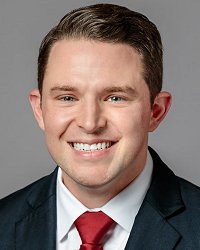
Cade Ingleson is an MBA candidate at Cornell University’s Samuel Curtis Johnson Graduate School of Management, focusing on strategy and sustainability. Originally from northern Michigan, He earned his undergraduate degree from the United States Military Academy at West Point in political science. Prior to Cornell, he led infantry formations in the 10th Mountain and 82nd Airborne Divisions for eight years as a U.S. Army officer and later worked as a business management consultant with Alkali Labs, an early-stage biotech company. Post-MBA, Cade is interested in addressing sustainability challenges in the social impact space to drive meaningful outcomes for others. In his free time, he enjoys spending time with his wife and daughter, doing CrossFit, and any type of outdoor adventuring.
Morgan A. Irons (Ph.D. ’26, Soil and Crop Sciences)

Morgan A. Irons is a Soil and Crop Sciences Ph.D. candidate in the Lehmann Lab at Cornell University, where their research investigates microbial adhesion mechanisms and organo-mineral interactions in soil aggregates under Earth gravity and varying gravity conditions. Irons is also Co-Founder and Chief Science Officer of Deep Space Ecology, an agriculture and space research network addressing food insecurity and human sustainability in the deep spaces of Earth, the Moon, Mars, and beyond. Their work has led to the development of frameworks and models for bioregenerative life support systems, soil management methodologies for degraded regolith conditions, and the experimentation of gravity mechanisms for natural Earth soils and biochar growth media on the International Space Station and a Blue Origin mission. Irons has delivered over 40 academic and industry talks and received numerous honors, including serving as an expert judge for NASA and CSA’s Deep Space Food Challenge, appointment to the Science Advisory Board of the Institute of Competition Sciences, and fellowships from the NSF, Cornell Atkinson Center, Carl Sagan Institute, and Norfolk Institute. Additional awards include the Ken Souza Memorial Spaceflight Award, Brooke Owens Fellowship, and Motherboard VICE’s 2017 Human of the Year.
Mollie J. Lipp (MBA ’26, SC Johnson College of Business)

Originally from the Finger Lakes region, Mollie attended Cornell’s ILR School for undergraduate studies and graduated in 2015. She then worked in wealth management at a boutique mutual fund firm and Merrill Lynch in Rochester, NY where she earned her Certified Financial Planner (CFP®) designation and developed a passion for the intersection of finance and sustainability. At Johnson, she is focused on leadership positions, climate-related coursework, and research surrounding biodiversity and business. Mollie is Co-VP of Education for the Sustainable Global Enterprise Club, Co-President of the Community Impact Club, VP of Finance for the Corporate Leadership Club, and Co-President of Johnson Wine & Spirits. Over the summer, she worked in St. Paul, MN at Ecolab, a global sustainability leader in the B2B water, hygiene, and sanitation space. She is infinitely curious and enjoys yoga, reading, and travel and believes that these activities make us better global citizens.
Gauri Nagpal (Ph.D. ’28, City and Regional Planning)

Gauri Nagpal is a Ph.D. student in City and Regional Planning. Her research examines how cities in the Global South leverage climate finance to fund urban development amid constrained fiscal and institutional capacities. Before beginning her doctoral studies, Gauri worked with the World Bank’s Global Facility for Disaster Reduction and Recovery, where she supported frameworks on flood risk and risk-informed land-use planning and financing, and with the Ford Foundation’s International Programs team, where she tracked global grants and partnerships and ensured that grant objectives aligned with regional strategies. Gauri is the founder of an initiative in India that provides electric street carts for informal workers, linking decarbonization with affordability. She holds dual master’s degrees in Urban Planning and Design Studies from Harvard University and a fellowship from the Indian Institute for Human Settlements.
Andy Jaeseung Shin (MBA, SC Johnson College of Business)

Andy is a triple Cornellian pursuing an MPA/MBA dual degree, following his undergraduate studies in Environment and Sustainability from the College of Agriculture and Life Sciences. He serves in the U.S. Army Reserve as a logistician, overseeing supply chain operations. Outside of his academic and military commitments, Andy enjoys birdwatching and endurance challenges, including earning a royal medal in the Netherlands after completing 100 miles in four days with a 35 pound pack.
Pera Malinda Sihite (MBA ’26, SC Johnson College of Business)

Pera is a second-year MBA student at Johnson. Originally from Indonesia, she has over ten years of experience in entrepreneurship. She began her career as a business incubator manager, working with early-stage startups and later founded a marketing firm that led multiple national campaigns. Her focus shifted toward sustainability when she founded Nol Karbon, a company developing both nature-based and tech-based carbon projects, including mangrove restoration, green rice field initiatives, biochar, and renewable energy. She is currently developing Nol Karbon AI, which applies artificial intelligence to scale and accelerate innovation in sustainability, particularly in ESG. At Johnson, she is active in Climatebase, Sustainable Business, the Emerging Markets Institute Fellowship, and the Energy and Tech Clubs, where her work is driven by the intersection of technology and sustainability.
Charles Arthur Tebbutt (Ph.D. Candidate, Natural Resources and the Environment)
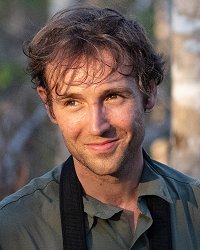
Charlie is a social-ecological systems researcher focussed on empowering people as stewards of their own environment. Working primarily with natural latex rubber in the Amazon, he uses bioacoustics to assess the positive impacts that farmers can have on bird biodiversity, and vice versa. As part of the Semlitz cohort, Charlie is assessing the potential for companies to prioritise sustainability in their supply chains, incentivising and rewarding smallholders who practice regenerative agriculture. Outside of work, Charlie enjoys camping and hiking across America’s beautiful national and state parks.
Bayu Ahmad (Ph.D. Candidate, Chemistry)

Is Sunlight-Driven Direct Air Capture Cost-Competitive?
Negative emissions technologies, such as direct air capture of CO2, are crucial parts in societal efforts to mitigate climate change risks. Yet, direct air capture technologies are energy- and cost-intensive. Unless energy transition has been realized, the use of mixed energy grid to drive direct air capture of CO2 is cost- and carbon-inefficient, and efforts in transitioning to renewable energy would yield much more carbon dioxide emission prevention.
Solar-driven carbon capture is a new technology that has been emerging from many academic laboratories since 2023, including Cornell. It aims to bridge the need for scalable carbon dioxide removal and efficiency of both energy and cost. However, as a novel idea, the practical aspects of solar-driven carbon capture have been under-investigated. As such, this capstone project works to answer the question: Would direct air capture driven by sunlight be sufficiently cost-competitive against or even outperform traditional technologies?
The study focused on the development of a dynamic tool to evaluate cost competitiveness. Comprehensive data from databases and primary sources include potential revenue streams, land price, material availability, and state-of-the-art CO2 capture performance data. This tool could help predict the viability of solar-driven direct air capture in various sociopolitical, financial, and technological scenarios and aid decision-making processes for businesses and policy makers.
Ethan Duvall (Ph.D. Candidate, Ecology and Evolutionary Biology)

Exploring Sustainable Economic Opportunities for the Baihuaeri Waorani in the Ecuadorian Amazon
The Amazon Rainforest is one of the most biodiverse and carbon-rich ecosystems on Earth, yet it faces escalating threats from deforestation and industrial expansion. These pressures also endanger Indigenous communities, who struggle to protect their ancestral lands, cultures, and sovereignty while adapting to modern economic demands.
With limited access to conventional professions, many opportunities are tied to the very industries driving environmental and cultural degradation. Sustainable, culturally grounded economic alternatives are therefore essential.
This study explores alternatives—including carbon and biodiversity credits, eco- and ethno-tourism, and non-timber forest products—for the Baihuaeri Waorani, an Indigenous group in the Ecuadorian Amazon first contacted in the 1970s and now facing growing financial needs for energy and commodities. Despite stewarding over a million acres of pristine rainforest, their participation in carbon markets is hindered by legal land rights, perceived additionality, and broader structural challenges. Biodiversity credits remain largely unmonetized and face foundational hurdles. Eco- and ethno-tourism offer more immediate potential and are already practiced by many communities members (primarily men), though opportunities for expansion remain. Additionally, the Baihuaeri’s unique artisanal traditions hold strong economic value, but are limited by local market access. In extension of this work, a nonprofit—the Amazon Research & Conservation Collaborative (ARCC)—is partnering with the Baihuaeri to expand tourism and craft markets internationally, supporting economic resilience while reinforcing cultural preservation and rainforest stewardship.
Jacob Hyppolite II (MBA ’25)
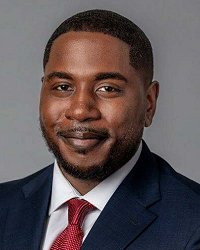
Enhanced Energy Efficiency and Grid Stability: The Role of Battery Storage Optimization
As population and economic growth currently outpace energy efficiency gains, the need for battery storage systems to meet rising energy needs has never been more apparent. Current electricity projections estimate global energy demand to grow faster than expected by 2050. The International Energy Agency (IEA) forecasts electricity demand to rise 3.4% annually through 2026, and multiple sources expect energy demand to double by 2050. Renewable energy sources are a critical component of the energy equation, expected to account for half of global electricity demand by 2030. Renewables, specifically wind and solar, present unique challenges due to their intermittency, grid integration, and regional constraints. Battery storage systems address these unique challenges and mitigate grid instability.
Battery storage systems achieve energy efficiency through smart charge-discharge cycles, reduced degradation, and enhanced overall performance. Recent innovations in lithium-ion and solid-state batteries have provided marked improvements in energy density, efficiency, and lifespan. Advancements in machine learning models provide a critical overlay in predictive maintenance, battery design, and overall safety. By optimizing battery storage techniques, stakeholders can achieve cost-effective energy solutions for both the commercial and residential sectors. This paper explores the pivotal role that batteries have in renewable energy storage and management, as well as the various types available. It will further assess the economic viability of battery storage systems and their optimization for diverse consumer profiles and energy market structures.
Shardul Prabhu II (Ph.D. Candidate, Civil & Environmental Engineering)

A Roadmap for Reusing Construction Waste for a Sustainable Construction Industry: Technological Advancements & Business Prospects
The industrial revolution has propelled the world further and led to significant technological developments in the last few centuries. This has led to an increase in the speed of urbanization and the standard of living, which has in turn led to a change in the quantity and size of houses. Due to an increasing demand for urban housing, the older buildings are being demolished, and newer high rises are being constructed in their space. This has led to an increase in production of construction materials, and particularly cement. The production of these raw materials releases a huge amount of CO2 emissions into the atmosphere. Cement production alone is responsible for approx. 6-8% of all anthropogenic emissions. This is a serious contribution by just one sector. A technological approach involving CO2 capture and co-utilizing industrial solid waste has been discussed and the impacts of deploying this technology on the construction industry have been identified. The construction industry is well-developed and slow to change. Therefore, a business case must be made for any new technological approach or material to be used in the industry. construction materials value chain. The key questions that this study seeks to address are: (i) Where is the driving force for decarbonized concrete going to come from? (ii) What are the socio-technical systems that engineers working on new technologies for decarbonized concrete need to be aware of? (iii) What is the cost at which the industry would be willing to adopt this new material?
Misaki Saito (MBA ’25)

Success Factors and Limitations of Coffee Reforestation Programs: Nestlé and Nespresso
The coffee industry has been and continues to be severely affected by deforestation, biodiversity loss, and climate change. In recent years, reforestation and sustainable sourcing initiatives have become an essential part of corporate strategies across businesses of various sizes. Multinational consumer product goods (CPG) companies like Nestlé and Nespresso are leaders in these programs which aim to restore ecological environments, improve working conditions for farmers and address issues around climate change and biodiversity.
Now that some time has elapsed since these programs started, there is a need to assess the actual impact on ecosystems and carbon sequestration, and how they align with science-based targets set by governments and international organizations. This research aims to explore the tangible outcomes of Nestlé and Nespresso’s reforestation initiatives within their coffee supply chains. By applying a sustainability science lens, this paper will evaluate contributions from an environmental, economic and social lens.
Lauren Swank (MBA ’25) and Johanna Van Fleet (MPA ’25)
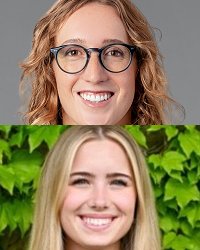
Rewiring for Decarbonization: Financial Barriers, Catalysts, and the Strategic Path Forward
Despite a surge in renewable energy development, the U.S. faces a critical bottleneck: the transmission interconnection queue. Although legislative measures such as FERC Order 2023 have aimed to improve queue management, significant challenges remain. The backlog threatens progress toward national decarbonization goals, prolongs greenhouse gas emissions from fossil fuel generation, and is especially problematic given the United States’ high levels of energy consumption. This research examines how financial mechanisms can be leveraged to overcome barriers to utility-scale renewable energy projects during the interconnection process. Some key obstacles include a high volume of non-viable applications, costly and time-intensive study processes by Regional Transmission Organizations (RTOs), prohibitive upgrade costs for individual developers, and systemic delays exacerbated by new incentive structures under the Inflation Reduction Act.
Addressing these challenges is crucial, as improving the interconnection process is significantly more cost-effective than large-scale transmission construction. Research indicates that effective solutions should encourage greater information-sharing, facilitate more dynamic and parallel processing approaches, and mitigate project risks. More specifically, financial mechanisms such as insurance for non-refundable queue deposits, solar revenue put option products, and transferable financial incentives inspired by the IRA’s tax credit markets could help accelerate the development of viable projects. Additionally, requiring offtake agreements with firm deadlines and encouraging larger, consolidated project applications could further improve queue efficiency. While much of the power lies in the RTOs and government entities’ timelines and processes, there are financial instruments that reduce risk and incentivize better project planning on the developer side of the equation, which could ultimately unlock the renewable energy backlog and move the US toward decarbonization faster.
About the Fellowship
Structure
The Semlitz Fellowship is an academic-year program from August to May. Each cohort includes Cornell MBA students and early career researchers (Ph.D. students and/or postdoctoral scholars).
Capstone
The Semlitz Fellows program is designed to increase knowledge and understanding that: 1) scientists have about how their work is applied or influences business decision-making; and 2) financial professionals have about the importance of science for informing sustainable business decisions. The capstone project provides Semlitz Fellows with the opportunity to explore the intersection of sustainability science and business and conduct applied research on that topic. All projects are expected to rely on a combination of primary and secondary data. Working with program faculty, each Fellow 1) defines their capstone project, 2) develops a research plan, and 3) completes the project. Semlitz Fellows can work on a capstone project individually or in partnership with other Fellows.
Coursework
All Semlitz Fellows will be required to complete: 1) NBA 6030 Strategies for Sustainability in the fall or spring semester and 2) the Semlitz Fellows seminar for fall and spring semesters.
Strategies for Sustainability is a 1.5 credit, seven-week, half term, lecture and case-based course which covers the fundamental issues of sustainability in the private sector context. The class meets twice per week for a 1.25-hour session.
The Semlitz Fellows seminar will include a mixture of sessions (i.e., lectures, discussion, speakers) focused on content as well as on supporting Fellows in the identification, development, and completion of their capstone project. The seminar will meet for up to two hours every two to three weeks.
Additionally, MBA students are required to complete additional coursework aligned with their interests which can be selected from a list of eligible courses.
Funding
Ph.D. students will receive up to nine months of GRA stipend, tuition, and health insurance support. Postdoctoral scholars will receive up to nine months of salary and fringe benefit support. MBA students will receive a partial tuition scholarship.
Partners
The Semlitz Family Sustainability Fellows Program is jointly administered by the Cornell Atkinson Center for Sustainability and the Cornell SC Johnson College of Business. The Semlitz Fellowship was established through the generosity of Stephen Semlitz (ILR ’75, MBA ‘76) & Cathy Glaser (ILR ‘74).